
The rapid expansion of artificial intelligence in media production has created a significant tension between mass-market accessibility and professional precision.
A recent analysis from Production Expert highlights a growing concern within the industry: as AI audio tools are designed to be "user-friendly" for everyone, they often strip away the nuanced controls that professional engineers rely on for high-stakes projects.
This democratization of technology has introduced a "black box" problem where the software makes creative decisions that the user cannot easily undo or refine.
The Problem of the "Black Box" Workflow
For beginners and small businesses, a one-click AI enhancement tool like Adobe Enhance Speech or Auphonic is a revolutionary resource. These tools can take a poorly recorded smartphone interview and make it sound broadcast-ready in seconds. However, for a professional engineer, the lack of adjustable parameters—such as specific frequency crossovers or compression ratios—can be a major hindrance.
When an AI tool "cleans" audio, it often uses aggressive subtractive EQ and noise gates. While the result is clearer, it can also introduce digital artifacts or "phaseiness" that degrades the natural quality of the human voice. In professional recording environments, these subtle issues are unacceptable. The "problem" isn't that the tools don't work; it's that they are often built to prioritize a "good enough" result for the average user over a perfect result for the specialist.
Precision vs. Automation in Post-Production
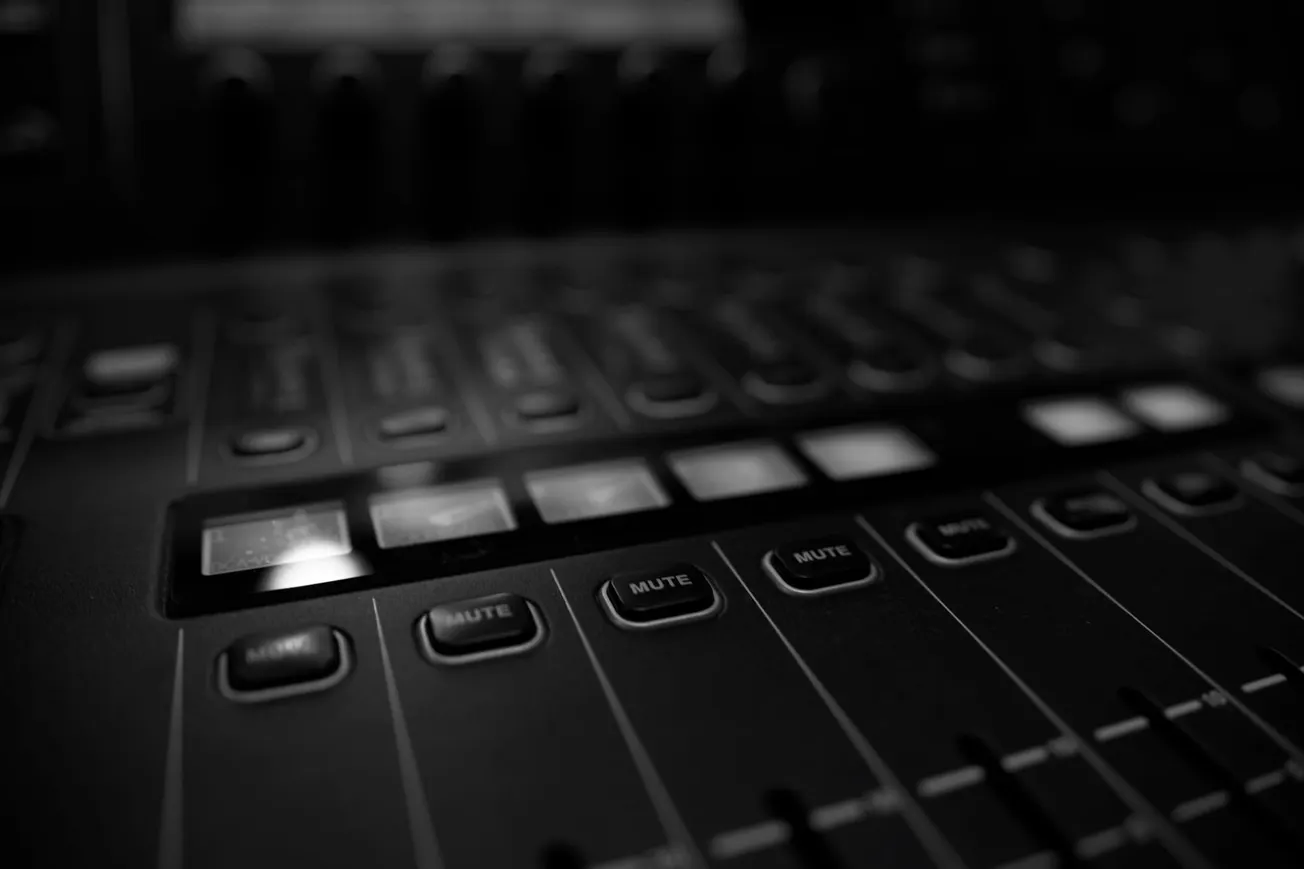
The friction arises when professional audio software begins to favor automated presets over manual override options. In 2026, many DAWs (Digital Audio Workstations) have integrated AI assistants that suggest mixing and mastering chains.
While these can speed up a workflow, they can also lead to a "homogenized" sound where different podcasts and videos begin to share the same artificial sonic signature.
Pro-level users require tools that offer:
- Granular Control: The ability to adjust the "intensity" of AI processing at specific frequency bands.
- Transparency: Clear indicators of exactly what the AI is changing in the waveform.
- Non-Destructive Editing: The ability to peel back AI layers without affecting the original raw file.
Without these features, AI tools remain a "closed loop" that forces a specific aesthetic onto the creator. This is particularly problematic for business brands looking to establish a unique and recognizable sonic identity.
Reclaiming Creative Authority
To combat the limitations of universal design, a new wave of "pro-centric" AI tools is beginning to emerge. These applications, such as the latest iterations of iZotope RX or specialized plugins from Sonible, use AI to analyze audio but leave the final processing decisions to the human operator. This "Human-in-the-loop" model ensures that technology serves the story rather than dictating it.
For educators and content teams, the strategy should be to use automated tools for rapid publishing of internal or low-stakes content while reserving manual, expert-driven workflows for high-authority brand assets. Understanding when to trust the AI and when to step in with manual editing is the defining skill of a modern media professional.
The Future of Specialized AI
The industry is currently at an inflection point. While the initial wave of AI was about making complex tasks easy for the general public, the next phase must focus on making those same tasks faster for the experts without sacrificing quality. As highlighted by Edison Research on media trends, the audience's expectation for high-quality production is only increasing.
To meet this demand, the tools of the future must move beyond being built "for everyone" and start being built for the specific, high-level needs of the creators who define the industry's standards.
More about AI:
 Staff Report
 Staff Report
 Staff Report