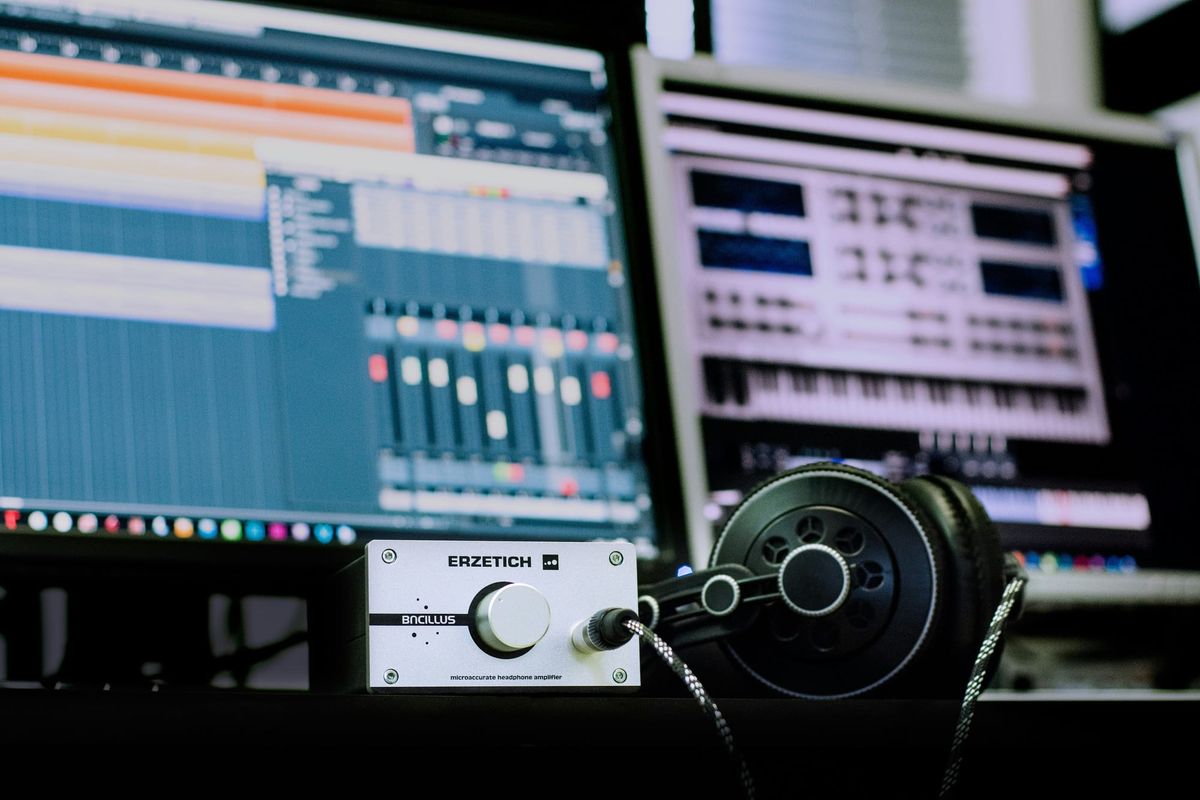

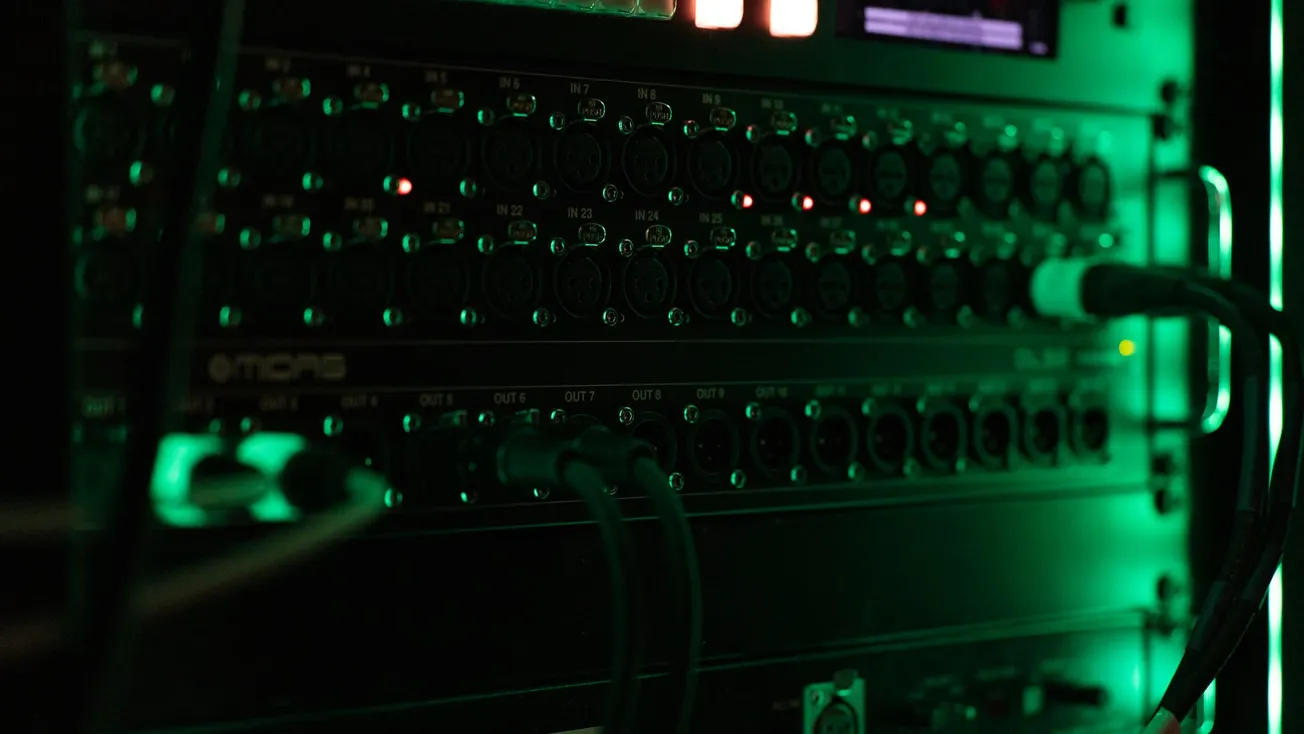
As production demands scale, the transition from desktop units to rack-mounted 1U audio interfaces becomes a necessity for serious creators and businesses. A 1U interface provides the physical space required for eight or more high-quality analogue inputs, enabling full-band tracking, multi-guest podcasting, and complex hardware routing without cluttering the workspace.
In 2026, the market has matured to offer a range of professional-grade options that combine flagship conversion with the rugged reliability needed for both studio and mobile recording environments.
One of the standout performers in the high-capacity 1U category is the Focusrite Scarlett 18i20 (4th Generation). Long regarded as a staple for project studios, the latest iteration features upgraded preamps with up to 69dB of gain, making it capable of driving even the most demanding dynamic microphones like the Shure SM7B without external lifters. With eight combined XLR/TRS inputs on the front and rear, plus ADAT expandability, it remains one of the most flexible solutions for creators who need to balance budget with high-count analogue I/O.
For those seeking specialized tone-shaping at the input stage, the Fender Quantum HD 8 has emerged as a top contender in 2026. This 1U interface is tailored for musicians and producers who require high-headroom preamps and 32-bit/192kHz resolution. It features eight MAX-HD preamps and dedicated re-amp outputs, allowing users to integrate outboard gear or guitar amplifiers back into the signal chain with zero latency. The inclusion of high-visibility metering makes it an excellent choice for environments where monitoring input levels across multiple channels is critical.
In the professional and enterprise sector, the Apogee Symphony Studio 8x16 offers a masterclass in transparent conversion. Specifically designed for modern immersive audio and high-fidelity recording, this unit provides eight XLR inputs and sixteen analogue outputs via DB25 connectors. Its 1U form factor belies its massive processing power, which includes onboard DSP for low-latency monitoring and sophisticated monitor control. For studios moving toward Dolby Atmos or complex multichannel workflows, the Symphony Studio series provides the necessary fidelity and routing density.
Article on the best audio interfaces for immersive mixing and Atmos
Reliability and driver stability are often the deciding factors for professional teams, which is why the RME Fireface UFX III remains a frequent recommendation. While it offers four mic/line inputs on the front, its total analogue input count reaches 12 when accounting for the rear-mounted TRS inputs. RME is widely recognized for its "SteadyClock FS" technology and long-term software support, ensuring that a 1U investment made in 2026 remains functional well into the next decade. Its ability to record directly to a USB thumb drive without a computer provides an essential failsafe for live recordings and location sound.
When selecting a 1U interface, creators should prioritize units that offer "combo" jacks for maximum flexibility between microphone and line-level signals. Furthermore, considering the future expansion of a studio is vital; many of these interfaces include ADAT ports, allowing for an additional eight inputs via an external preamp unit. This ensures that as a podcast or production house grows, the core interface remains the stable heart of the audio ecosystem.
Choosing the right high-input interface is a strategic decision that affects the clarity, scalability, and efficiency of every recording session. By investing in a 1U unit with eight or more analogue inputs, creators gain the headroom and professional features necessary to produce broadcast-ready content. Detailed reviews and technical comparisons of these units can be found through the latest industry reports at Production Expert and MusicRadar.
More about audio equipment:
 Staff Report
 Staff Report
 Staff Report