
Understanding Class A Power in Modern Audio Production
Schiit Audio has released the Lyr 5, the latest iteration of its popular transportable headphone amplifier and powerhouse preamp. This new model introduces a technical feature rarely seen in consumer or prosumer audio gear: a front-panel LED that indicates when the amplifier is operating in Class A mode. For podcast producers and video editors, understanding the transition between amplification classes is essential for maintaining consistent audio transparency during long monitoring sessions.
The Lyr 5 utilizes a high-voltage Continuity output stage, a proprietary technology designed by Schiit to eliminate transconductance droop. This technical approach aims to provide the sonic benefits of Class A operation—characterized by low distortion and high linearity—without the extreme heat and inefficiency typically associated with traditional Class A designs. The inclusion of a visual indicator allows users to see exactly when the amplifier moves beyond its Class A bias into Class AB, providing a real-time look at how much power is being drawn by specific sets of headphones.
The Importance of Headphone Amplification for Creators
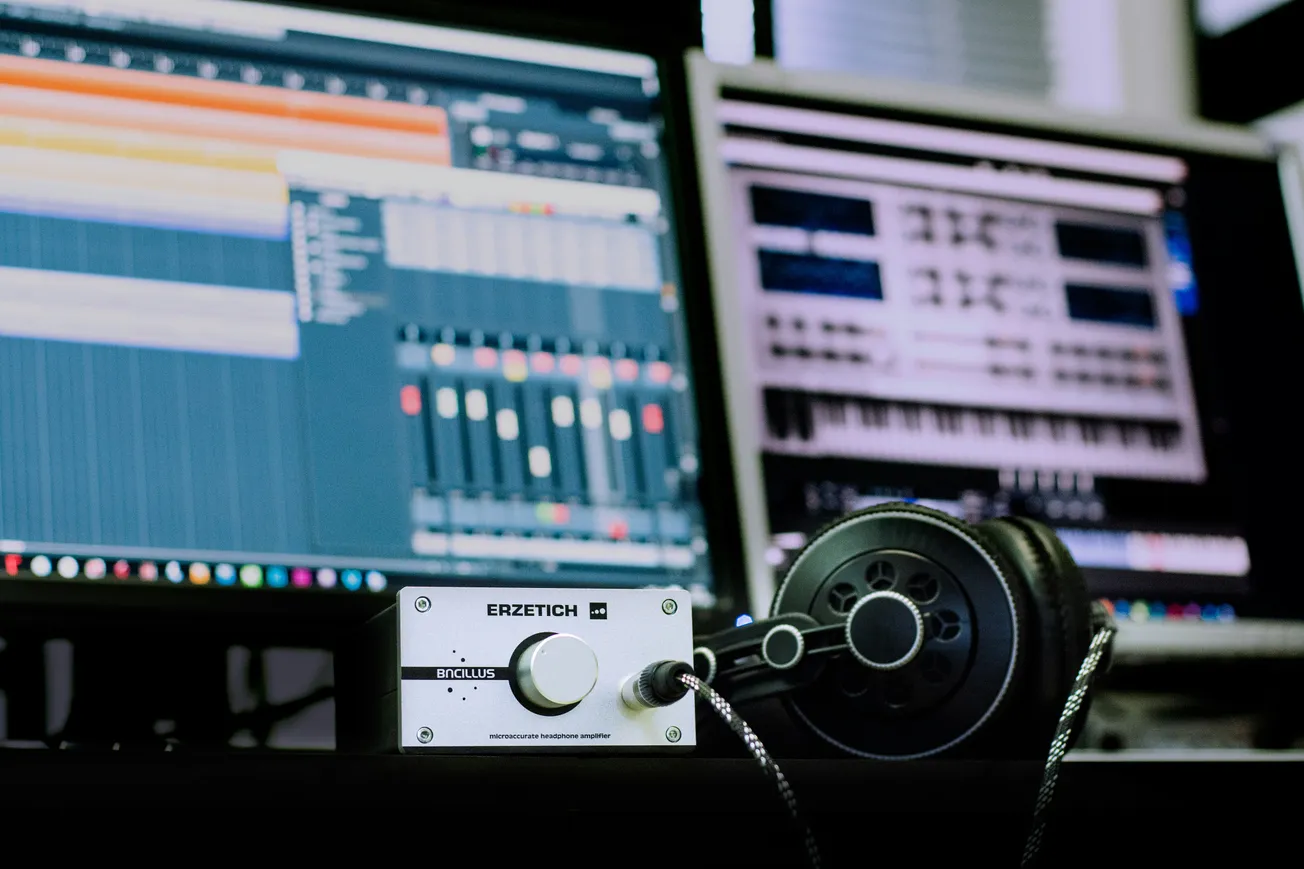
While many creators rely on the built-in headphone jacks of laptops or entry-level audio interfaces, dedicated amplification is often necessary for high-impedance professional headphones. Proper amplification ensures that the frequency response of the monitor remains flat, preventing the "thin" or "muddy" sound that can lead to poor mixing decisions in post-production. The Lyr 5 provides up to 6 watts of power into 32 ohms, making it capable of driving nearly any headphone on the market, from sensitive in-ear monitors to demanding planar magnetic models.
Beyond its power delivery, the Lyr 5 serves as a versatile hub for a small production studio. It features a modular design that allows users to install internal cards, such as a Phono stage for sampling vinyl or a high-resolution Digital-to-Analog Converter (DAC) for direct computer connection. This modularity reduces desk clutter, which is a significant advantage for independent creators working in limited spaces. By integrating the DAC and amplifier into a single chassis, users can simplify their signal chain and reduce potential points of interference.
Visual Feedback and Workflow Efficiency
The new Class A indicator on the Lyr 5 is more than an aesthetic choice; it serves as a functional tool for audio engineering. In a studio environment, maintaining a consistent listening environment is vital. If an editor notices the Class A light flickering or turning off frequently, it indicates that the headphones are drawing significant current, which might prompt a change in volume levels or equipment choice to stay within the most linear operating range of the device.
This level of transparency aligns with the broader industry trend of providing users with more data regarding their hardware performance. As podcasting and video production become more sophisticated, tools that offer professional-grade monitoring help bridge the gap between amateur setups and high-end broadcast facilities. High-fidelity audio equipment ensures that the final output sounds professional across all playback devices, from smartphone speakers to home theater systems.
Integrating High-End Audio into Business Workflows
For businesses using audio for internal communication or marketing, investing in reliable playback hardware like the Lyr 5 can improve the quality of quality control (QC) processes. Clearer audio monitoring allows teams to catch mouth noises, background hiss, or clipping that might otherwise be missed on lower-quality gear. This attention to detail is what separates professional branded content from standard amateur recordings.
The Lyr 5 also functions as a preamplifier with a motorized remote volume control, allowing it to be integrated into a larger speaker system. This dual-purpose functionality makes it a cost-effective solution for studios that need to switch between headphone monitoring and "checking the mix" on studio monitors. By providing a clear path for audio signals and a visual cue for power stages, Schiit Audio continues to simplify the complexities of high-end audio for a wider audience of creators.
More about audio equipment:
 Staff Report
 Staff Report
 Staff Report