
The evolution of a world-class filmmaker often begins with a single, focused idea. Before Ryan Coogler directed global blockbusters like Black Panther and Creed, he produced a six-minute student film titled Locks (2009) while attending the USC School of Cinematic Arts. This short film, which features no dialogue, serves as a masterclass in visual subtext and efficient storytelling for businesses and independent creators working with limited resources.
Locks follows a young man in Oakland as he walks through his neighborhood toward a barbershop. Along the way, the protagonist witnesses the police stop and frisk other young men who share his hairstyle. The film concludes with the character choosing to shave his head—not merely as a reaction to social profiling, but as a gesture of solidarity for his sister, who has lost her hair during medical treatment.
The Power of Visual Subtext
For content creators, the primary lesson of Locks is the effectiveness of "show, don't tell."
By removing dialogue entirely, Coogler forces the audience to pay attention to environmental cues and character behavior. The sound of a hovering police helicopter and the visual of handcuffs (the "locks" of the title) establish immediate tension without a single line of explanatory script. This approach is highly applicable to modern video marketing and social media content, where capturing attention quickly through visual cues is often more effective than dense narration.
Coogler has noted in interviews that the film was inspired by a real cultural trend in the Bay Area, where young men were cutting off their dreadlocks to avoid mistaken identity and frequent police stops. By grounding the story in a specific social reality while adding a personal, emotional twist at the end, the film achieves a universal resonance. This balance of the political and the personal is a hallmark of Coogler’s later work, including Fruitvale Station.
Production Efficiency and Constraints
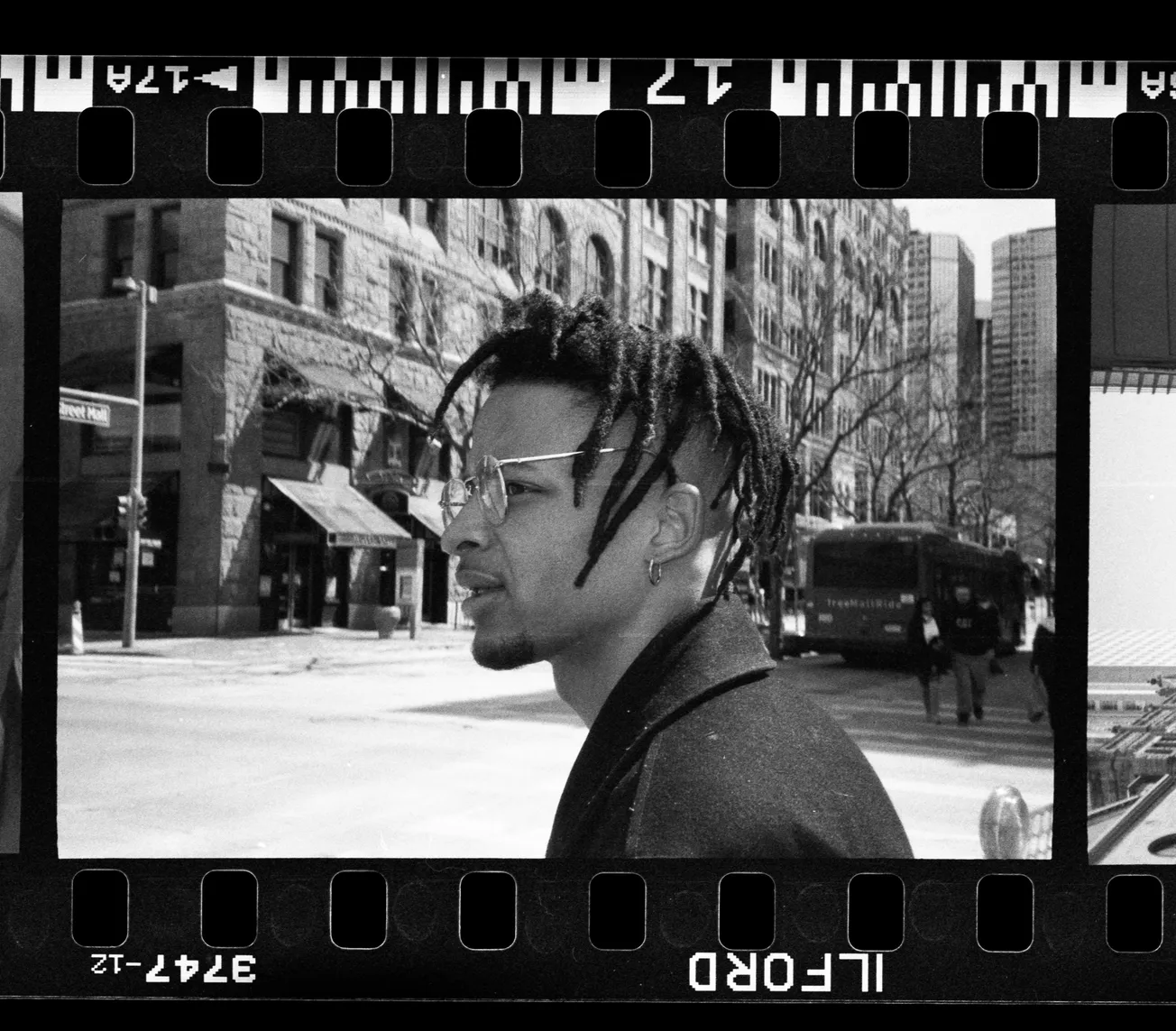
Modern creators often feel the need for complex setups, but Locks demonstrates the value of simplicity. The film was shot on 16mm film with a small crew and limited locations, focusing on a single journey and a single decision. This narrow scope allowed the director to maximize the emotional weight of every frame. In a business context, this translates to the "less is more" philosophy of video production: a well-executed 60-second video with a clear emotional arc can be more impactful than a sprawling, unfocused presentation.
The collaboration between Coogler and Academy Award-winning composer Ludwig Göransson also began with this student project. The use of sound design and score to replace dialogue highlights the importance of audio in storytelling. Even in a film titled Locks, the auditory landscape—from the street noises to the rhythmic snip of scissors—builds the narrative rhythm. For podcasting and video teams, this serves as a reminder that audio quality and creative soundscapes are essential components of the viewer's emotional journey.
Applying Student Film Logic to Professional Content
One of the greatest challenges for content teams is scaling their output without losing the human touch. Locks succeeded because it was "true" to the filmmaker's voice and environment. Small businesses and educators can apply this by focusing on stories that are native to their own communities or industries. Authenticity in video production often stems from specific, grounded details rather than high-concept artifice.
By analyzing early works like Locks, creators can see the "DNA" of a successful career. The film proves that high production value is secondary to a clear point of view and a willingness to trust the audience’s intelligence. Whether producing a brand documentary or a short-form social video, the principles of subtext, narrative economy, and emotional honesty remain the most powerful tools in a creator's arsenal.
More about film:
 Staff Report
 Staff Report
 Staff Report