
The Critical Role of Sustained Write Speed
As video podcasts move toward 4K and high-bitrate standards in 2026, the demand placed on recording media has intensified. For creators and businesses, the most common cause of technical failure during a long-form session is not the camera or the microphone, but the SD card. When a card cannot keep pace with the data stream, the camera may drop frames, stop recording entirely, or even corrupt the final file.
The key to preventing these issues lies in understanding "sustained write speed" rather than the "peak speed" often advertised on packaging. For long-form production where recording can last over an hour, the card must maintain a consistent minimum performance level. This guide clarifies the necessary speed classes and capacities required to support a modern video workflow.
Decoding Speed Classes: V30, V60, and V90
The Video Speed Class, represented by a "V" followed by a number, is the most reliable metric for videographers. This number indicates the minimum sustained write speed in Megabytes per second ($MB/s$). As of 2026, V30 (30 $MB/s$) remains the entry-level standard for basic 4K recording, but it is often pushed to its limits by high-bitrate 10-bit color formats.
According to research from ProGrade Digital, V60 cards have become the recommended baseline for professional long-form content. These cards offer a sustained 60 $MB/s$, which comfortably handles the high data rates of 4K at 60 frames per second. While V90 cards provide the highest performance at 90 $MB/s$, they are typically reserved for 8K video or specialized "All-Intra" codecs. For the majority of podcasting applications, V60 provides the ideal balance of reliability and cost-efficiency.
Capacity Planning for Extended Sessions
Data management is a primary concern for content teams. A single hour of 4K 10-bit video can easily exceed 100GB, depending on the bitrate. To avoid the friction of swapping cards mid-interview, high-capacity storage is mandatory. The 256GB and 512GB tiers are currently the "sweet spot" for 2026, offering enough overhead for several hours of continuous recording.
Data from SanDisk emphasizes the importance of using the exFAT file system for these high-capacity cards. Unlike the older FAT32 system, which limits individual file sizes to 4GB, exFAT allows for seamless, continuous files. This is essential for long-form podcasts, as it prevents the camera from "spanning" or splitting the recording into multiple segments, simplifying the post-production and syncing process.
Durability and Professional Reliability
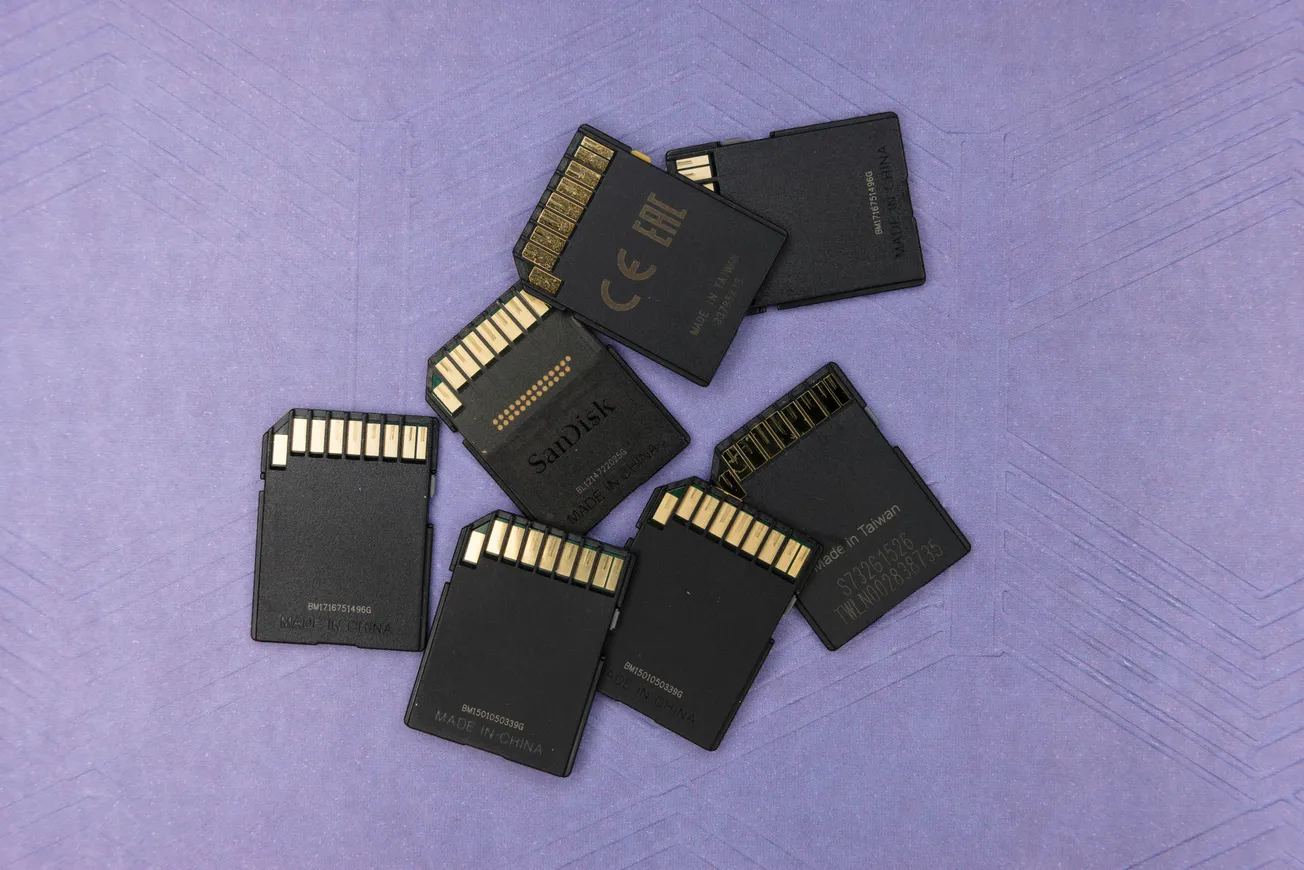
In a business environment, data integrity is paramount. Professional-grade cards, such as the Sony TOUGH series or Lexar Professional lines, are engineered with enhanced physical durability. These cards are often designed without the fragile plastic ribs and write-protect switches found on consumer models, reducing the risk of mechanical failure when frequently inserted into cameras and card readers.
Furthermore, these professional cards often feature advanced thermal management. Recording 4K video generates significant heat, which can cause cheaper cards to throttle their performance or fail. Investing in reputable brands from authorized dealers is the best defense against counterfeit media, which frequently misrepresent their speed ratings and capacity.
Optimizing the Workflow
Beyond the recording stage, the speed of your SD card also impacts the efficiency of your editing team. Cards with high "read speeds" allow for faster data offloading, or ingesting, to a computer. A V60 or V90 card paired with a UHS-II card reader can transfer footage significantly faster than standard UHS-I media, saving valuable hours in the production cycle.
By prioritizing sustained write speed and physical durability, businesses can eliminate one of the most common points of failure in video production. Selecting the right SD card ensures that the focus remains on the guest and the story, rather than the hardware.
More about video equipment:
 Staff Report
 Staff Report
 Staff Report