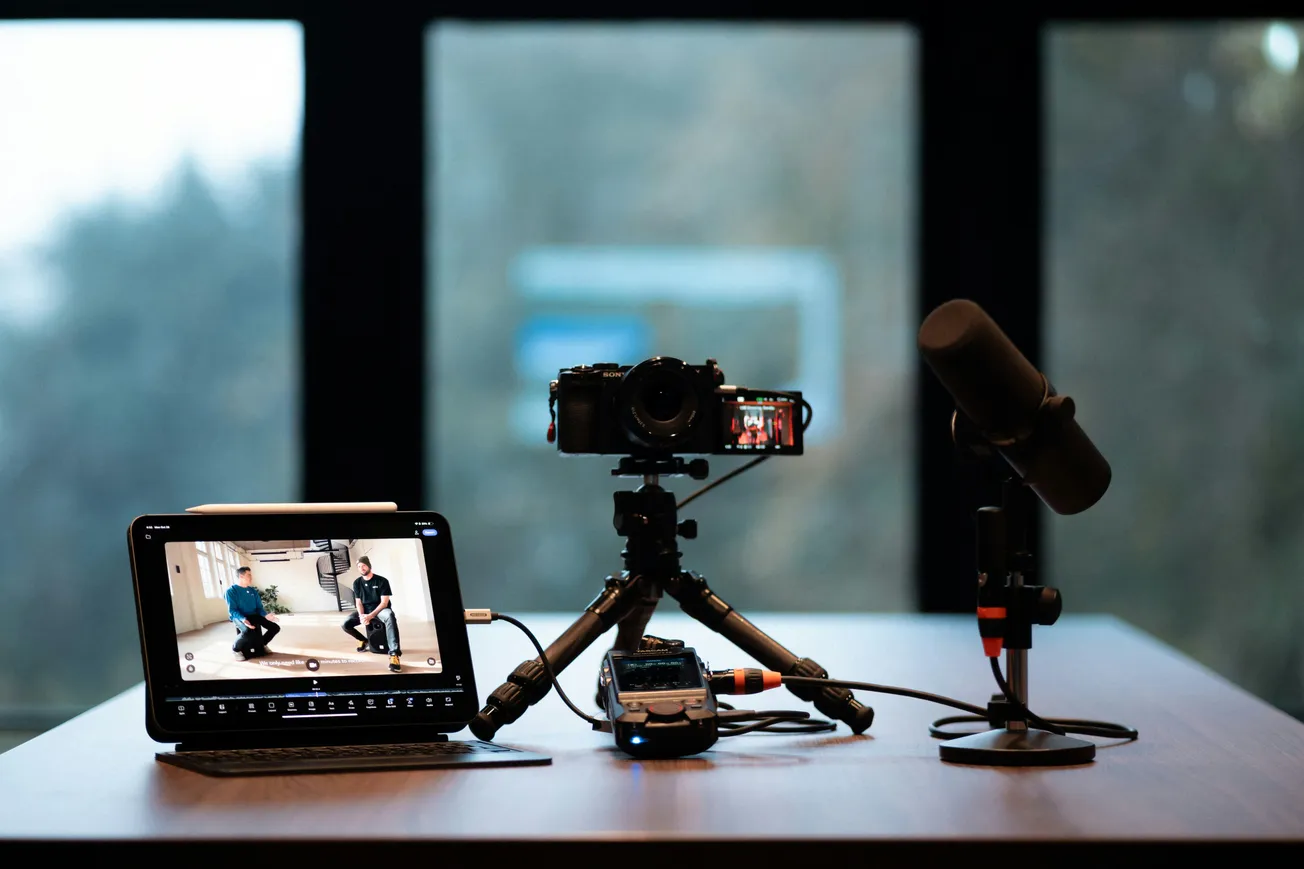

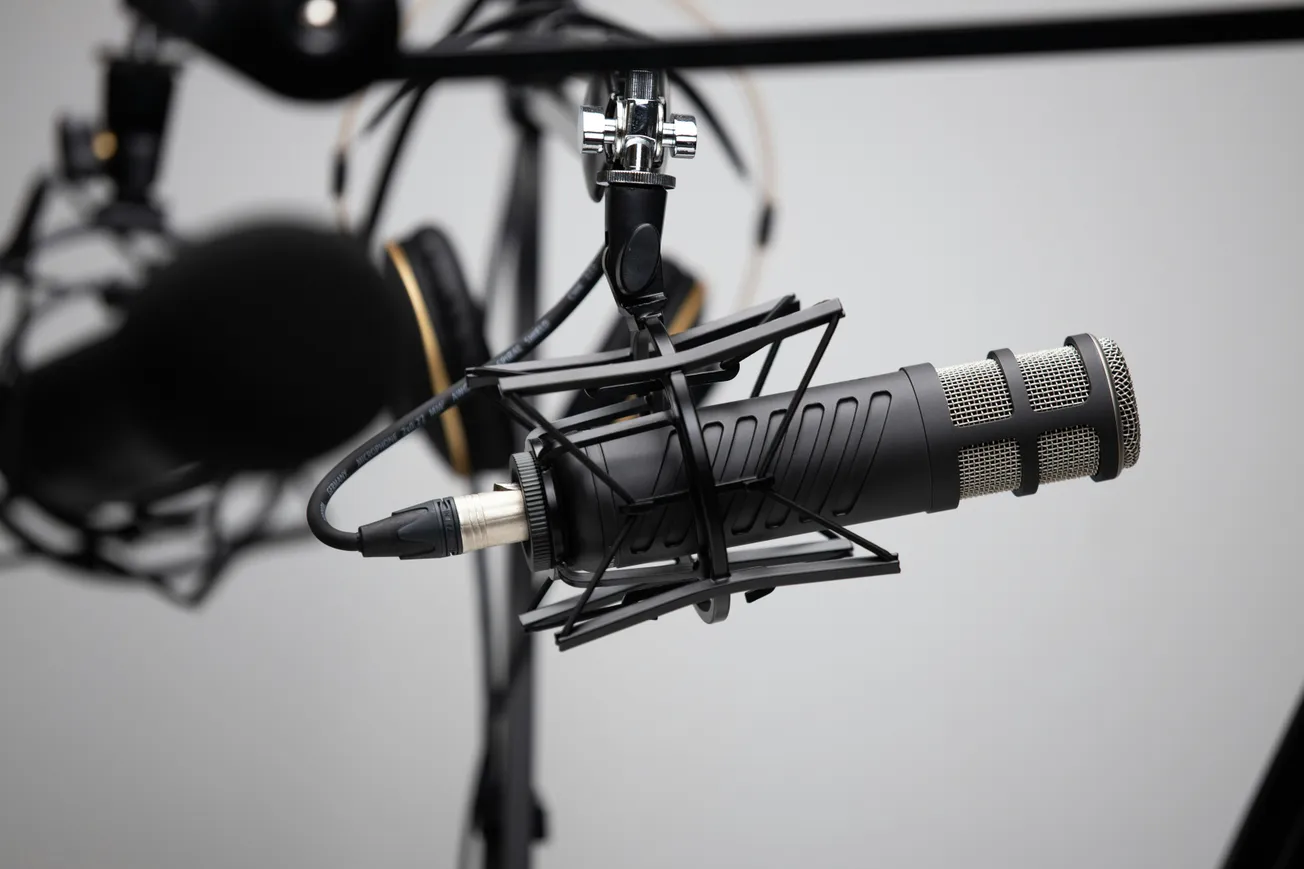
This review examines the sE Electronics 6160 shotgun microphone, a $500 condenser microphone designed for clear and detailed audio capture. The review covers included accessories, physical construction, onboard features, and performance across a range of controlled tests, along with comparisons to other commonly used microphones in similar and adjacent categories.
What’s in the Box
The sE Electronics 6160 package includes the microphone, a protective storage box, a foam windscreen, a microphone clip, and a stand adapter. Documentation and branded stickers are also included.
Build Quality and Features
The microphone features a full metal housing designed for durability while remaining lighter than several competing shotgun microphones, such as the Sennheiser MKH 416 and the Rode NTG3.
Two switches are located on the microphone body: one controls the pad with -10 dB and -20 dB options, and the other engages a high-pass filter at either 80 Hz or 160 Hz. The XLR output is positioned at the base of the microphone. Manufacturing is based in China.
Sound Tests
A series of tests were conducted to evaluate the microphone’s performance in different recording scenarios.
Polar Pattern Test
Rotating the microphone around a sound source demonstrates its supercardioid pickup pattern. The test highlights front-facing sensitivity and off-axis sound attenuation from the sides and rear.
Plosive Test
Plosive handling was evaluated using close-proximity consonant sounds such as “p” and “b.” Results indicate moderate resistance to plosives, with improved performance when used at typical dialogue distances.
Distance and Proximity Effect
Recordings were made at varying distances to demonstrate changes in low-frequency response caused by proximity effect. As expected, bass response increased at closer distances.
Background Noise Rejection
Keyboard typing with loud mechanical switches was introduced as background noise. The microphone maintained intelligibility of the primary voice signal while reducing the prominence of the keyboard noise.
Room Tone Tests
Recordings were made in both acoustically treated and untreated rooms. The microphone captured additional reflections in the untreated environment, consistent with expectations for a directional condenser microphone.
Shock Rejection Test
Desk and boom arm taps were used to assess vibration transfer through the included mount. The mount reduced handling noise to a noticeable degree but did not fully isolate the microphone from all vibrations.
Resonance Tap Test
Tapping on the microphone body was used to identify potential resonant frequencies. The microphone housing exhibited minimal ringing, suggesting effective internal damping.
Feature Demonstrations
High-Pass Filter
The 80 Hz and 160 Hz high-pass filter settings were demonstrated to show progressive low-frequency attenuation. Engaging the filter reduced bass content and helped control low-end buildup.
Pad
The -10 dB and -20 dB pad settings were tested using louder sound sources. Both settings effectively reduced signal level to prevent clipping.
Foam Windscreen
Recordings with and without the foam windscreen showed minor tonal differences. The windscreen primarily functions to reduce wind noise rather than alter frequency response.
Music Test
The microphone was used in a music recording context to evaluate its response on instruments and vocals. Results demonstrated adequate detail and clarity across multiple sources, with tonal balance influenced by placement and distance.
Pros and Cons
Pros
- Detailed and articulate sound reproduction
- Effective directional background noise reduction
- Lightweight construction
- Onboard pads and high-pass filters
- High maximum SPL handling
Cons
- Shock mount not included in the standard package
Overall Assessment
In controlled recording environments, the sE Electronics 6160 functions as a versatile shotgun microphone suitable for dialogue, spoken word, and select music applications. Its frequency response emphasizes detail and intelligibility, with controlled low frequencies and pronounced high-frequency presence. Performance varies depending on placement, room acoustics, and intended use.
The sE Electronics 6160 is well-suited for indoor dialogue, voice recording, and applications requiring directional sound capture. In controlled studio environments focused solely on music recording, small-diaphragm cardioid condensers may offer greater tonal flexibility and simpler placement. However, for users requiring a directional microphone with onboard filtering and pad options, the sE 6160 represents a capable option within its price range.
More about microphones:
 Staff Report
 Staff Report
 Staff Report