
The Legacy of Connections and James Burke
The 1978 BBC series Connections remains a landmark in educational broadcasting. Hosted by science historian James Burke, the program explored the interlinked history of science and technology. Rather than presenting history as a linear progression, Burke focused on the surprising ways that one discovery influenced another across centuries.
The show was noted for its high production values and location-based storytelling. Burke frequently traveled across the globe to demonstrate working models of historical inventions. This immersive approach built a high level of trust and engagement with the audience, setting the stage for one of the most famous moments in television history.
The Logical Path from Food to Space Flight
In the eighth episode of the series, titled Eat, Drink, and Be Merry, Burke traces a causal chain that begins with the concept of credit in the Duchy of Burgundy. He explains how the need to fund large armies led to new military formations and eventually the French Revolution. These large-scale conflicts created a demand for portable food sources for soldiers.
This demand resulted in the invention of bottled and canned food. Scientists at the time believed food spoilage was caused by bad air, which led to the development of refrigeration and air conditioning. This technology eventually evolved into the vacuum flask, or thermos, designed to keep substances at stable temperatures.
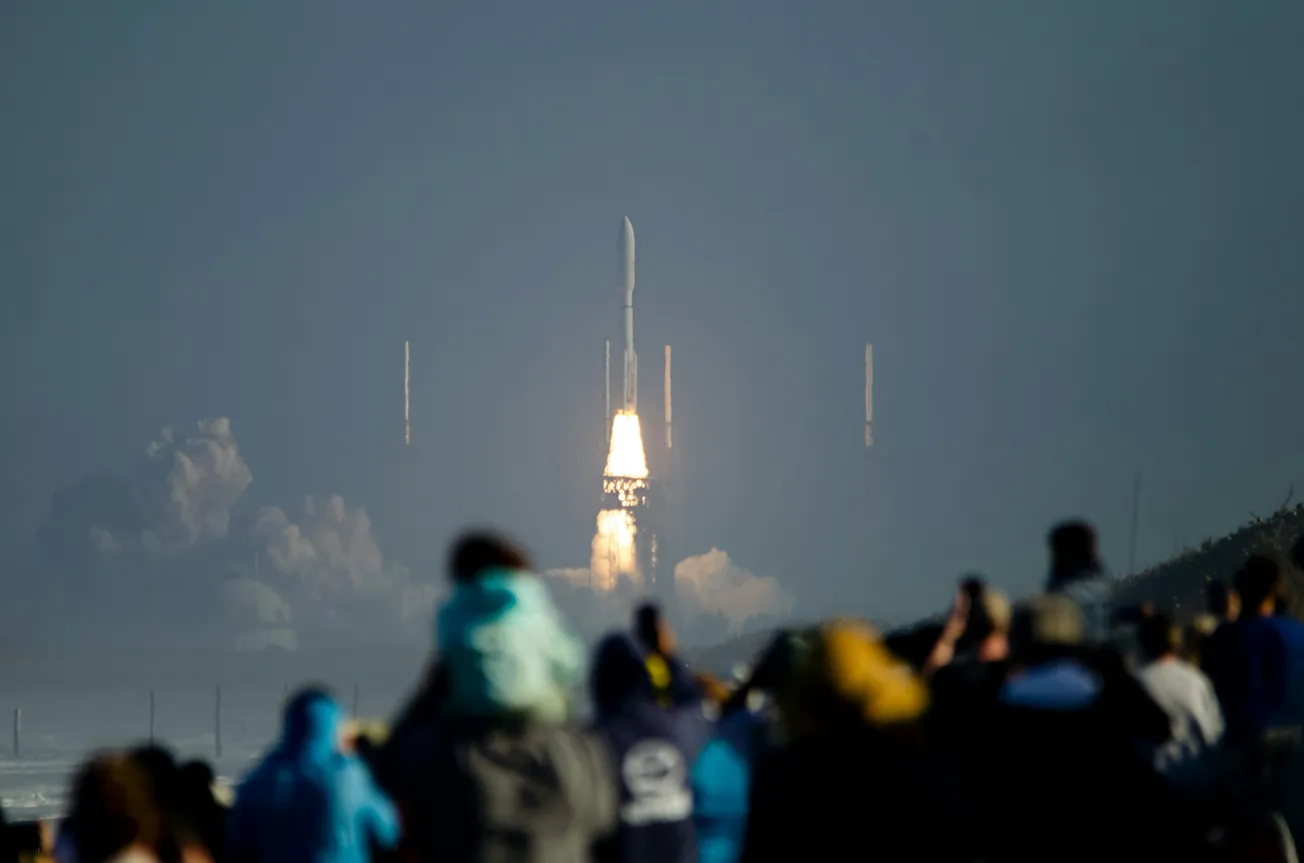
The final link in this chain involves the storage of liquid fuel. Burke illustrates how the principles of the vacuum flask were applied to store the volatile liquid oxygen and hydrogen required for rocket propulsion. This explanation concludes at a NASA launch site, where the theoretical history meets modern physical reality.
Deconstructing the Famous Rocket Shot
The shot that many cinematographers and historians consider the greatest in television history occurs at the end of this explanation. It consists of a single, continuous take where Burke stands in the foreground with a rocket on a launchpad in the distance. The sequence is defined by its extreme technical difficulty and the lack of a second chance.
Timing and Synchronization
The greatness of the shot stems from the perfect synchronization between Burke's speech and the NASA launch schedule. A rocket launch is a massive logistical event costing millions of dollars and involving hundreds of personnel. NASA does not delay or accelerate a launch to accommodate a film crew's needs.
Burke had to time his monologue so that his final gesture would coincide exactly with the ignition of the engines. As he delivers his final line, the ground begins to vibrate. Burke remains composed, finishing his sentence and turning toward the launchpad just as the rocket begins its ascent. The fire emerges from the base of the rocket at the precise moment he stops speaking.
The Absence of Digital Manipulation
Because this was filmed in 1978, there were no digital tools available to fix timing errors in post-production. There was no green screen, no CGI, and no way to composite the presenter into a separate shot of a launch. The authenticity of the moment is what continues to impress modern viewers who are accustomed to artificial spectacles.
The cameraman also played a vital role in the success of the shot. The composition keeps both Burke and the rocket in focus, providing a sense of scale that emphasizes the magnitude of the event. The camera follows the rocket as it leaves the frame, transitioning from a human-centered story to a technological achievement.
Why Authenticity Still Resonates
In an era of deepfakes and AI-generated content, the Connections rocket shot serves as a reminder of the power of practical filmmaking. The clip frequently goes viral on social media platforms because it represents a level of professional risk that is rarely seen in modern educational programming. If Burke had stumbled over a single word, the shot would have been ruined.
The enduring popularity of the series and this specific moment highlights a public desire for genuine, unfeigned content. The shot is not just a display of good luck; it is a testament to meticulous planning and the ability to perform under high pressure. It remains a standard for how to combine complex educational narratives with high-stakes visual storytelling.
More about visual storytelling:
 Staff Report
 Staff Report
 Staff Report