
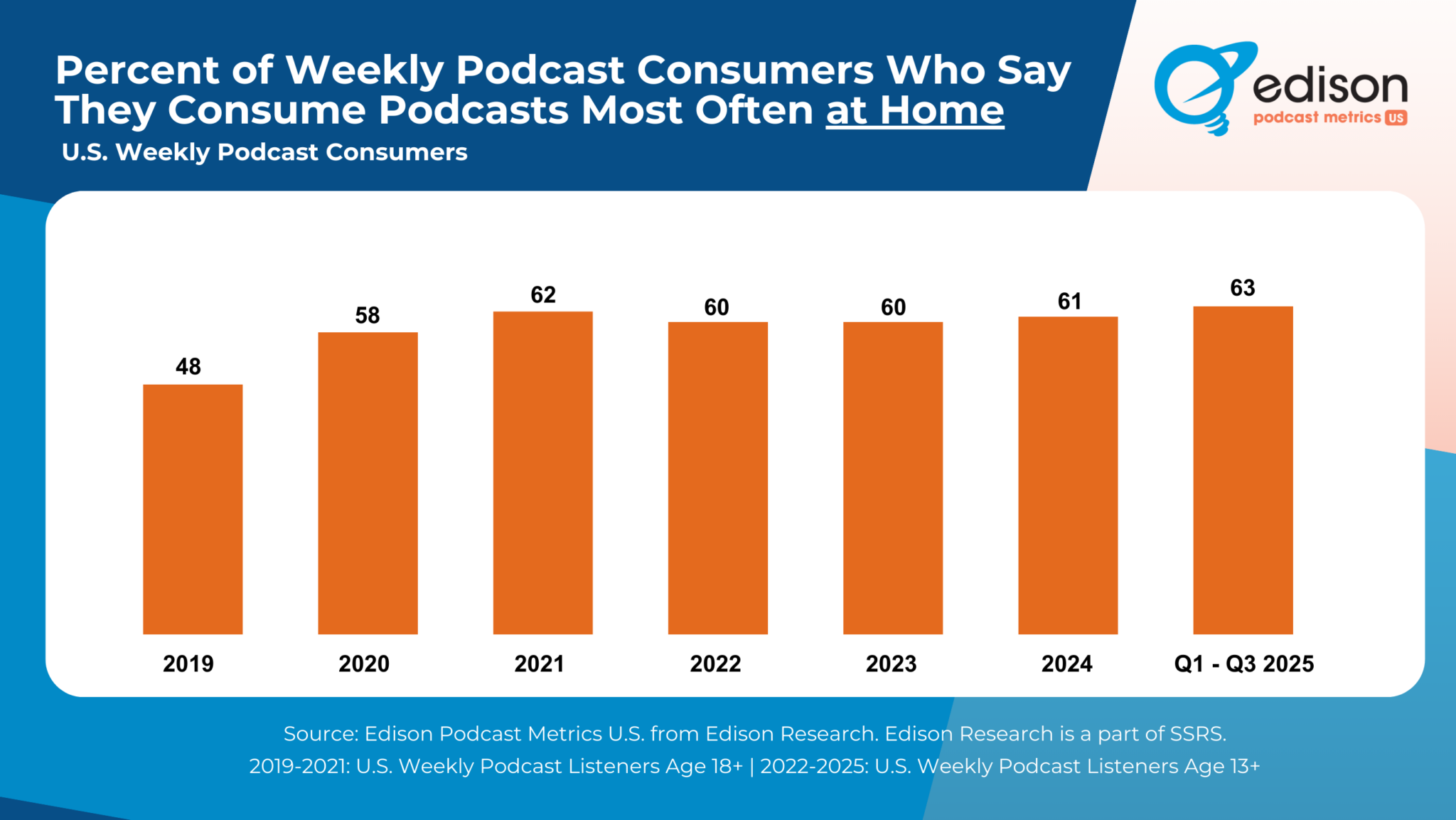
Podcast listening habits continue to evolve—and in 2026, one trend is clear: more people are tuning in from home than ever before. According to new data from Edison Research’s Share of Ear study, 63% of weekly U.S. podcast listeners now say they listen most often at home, up from 55% in 2017.
This shift has real implications for creators, marketers, and businesses using audio content. It changes when, where, and how your audience engages—and how you should think about sound design, content length, and promotion strategies.
What’s Behind the Growth of At‑Home Listening?
Edison Research attributes this sustained increase to long-term behavioral shifts sparked by the pandemic, which introduced many new listeners to podcasts as part of their home routines. But the trend has held strong even as commuting has returned for many Americans.
Several key factors are driving the rise:
- Smart speakers and home assistants make passive listening easier during chores or downtime
- TV-connected podcast apps (like YouTube, Spotify, and Apple Podcasts on smart TVs) make audio more accessible in shared spaces
- Flexible remote work means fewer people listen exclusively in transit
- Multitasking-friendly content allows listeners to engage while cooking, cleaning, or exercising
The convenience of on-demand content at home continues to fuel podcast consumption across age groups and content types.
What This Means for Creators and Brands
1. Optimize for Home Playback Environments
Creators should consider how content sounds on home speakers, TVs, or open-room settings. This may mean:
- Prioritizing clear, clean audio mixes
- Avoiding overly quiet dialogue or inconsistent volume
- Being mindful of audio compression for smart speakers
2. Rethink When You Release and Promote Episodes
At-home listeners tend to listen during routines (morning coffee, meal prep, wind-down time), which may not align with traditional "commute-hour" podcast drops. Test new release windows and use email or social prompts tied to in-home habits.
3. Embrace Visual Platforms Like YouTube
As podcast listening merges with lean-back video viewing in living rooms, posting full episodes or clips on YouTube can extend reach—especially if your content is formatted to work on both audio and video.
4. Explore Family or Group-Friendly Topics
With more people listening in shared spaces, topics that appeal across demographics or avoid NSFW content may perform better in some households.
5. Target Advertising Toward In‑Home Moments
If you're monetizing through sponsors, align messages with home routines. Ads about kitchen gadgets, wellness, smart tech, or food delivery may feel more relevant when heard in the kitchen than in the car.
The Mobile-Home Listening Balance
While at-home listening leads overall, mobile devices still dominate playback—listeners simply carry their phones from room to room. According to Edison, smartphones remain the primary device for podcast consumption, but the context has changed: the couch and countertop have replaced the commute.
This duality means creators must still design content that works in multiple attention states—from passive background listening to active focus.
Final Takeaway
The podcast audience of 2026 isn’t just on the move—they’re at home, tuned in, and building listening into daily life. For creators and businesses, this offers a huge opportunity to meet people where they’re most comfortable.
Prioritize home-friendly content strategies, and your podcast will feel like a natural part of your listener’s day.
More about podcast listening trends:
 Staff Report
 Staff Report
 Staff Report